



|
|
|
|
by Editor Fernando Coelho
Edited and pubished by Yvette Depaepe, the 4th of March 2026
BEYOND THE BASICS IN STREET PHOTOGRAPHY
Photography has a set of concepts and rules that can help you take good photos, including rules of exposure, composition, and lighting.
Those rules are the stereotypes, clichés, and shortcuts you use as a reference while crafting your photos.
They are building blocks.
But, from there on, you must lay down your path and create your style.
It would be best to recognize that you can break free from those stereotypes and let the viewers hear your voice.
There are moments when bending — or breaking — the rules can transform a simple shot into a compelling photograph. Perhaps it will be a piece hanging on your home wall or even gracing a gallery wall.
And the list continues.
These are all good questions that can guide your decisions when you are out and about on the streets.
One thing I can assure you. If you always say yes to those questions, you are on your way to getting bored and boring the others with what is recorded on your SD card.
Understanding the rules is crucial — it’s like learning the grammar of a language. But just as important is knowing when to deviate from those rules and add your own creative twist while telling your stories. This is what sets your work apart and keeps it fresh and exciting.
So let’s explore when you should break some rules and expand your mind.
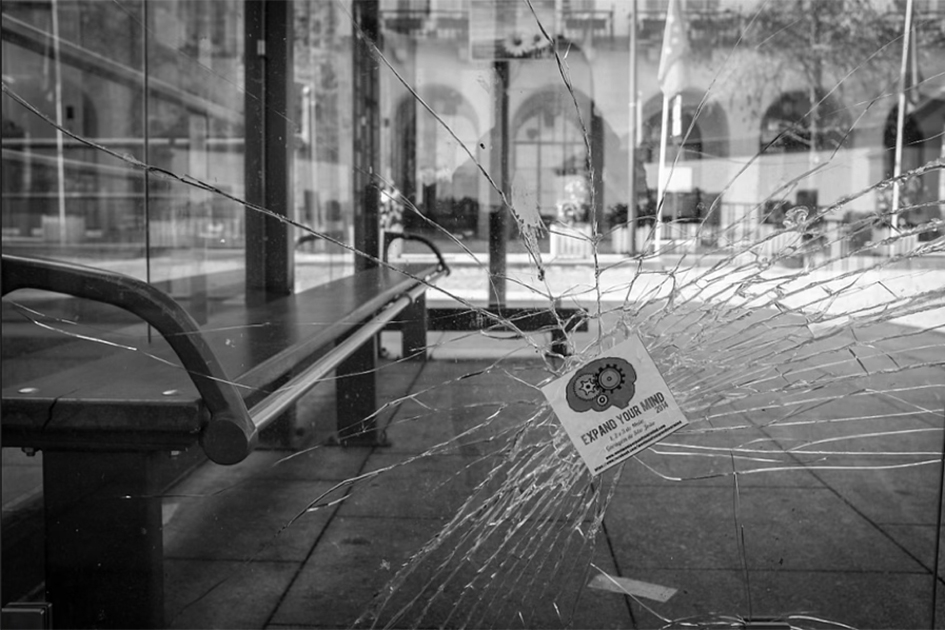
'Expand your mind' by Fernando Coelho
Rules of Photography
Plenty of information is out there, listing and explaining the rules that can help you take fantastic photographs.
I have used this source for this story and limited the list to what potentially applies to Street Photography.
Composition
Concepts
Exposure
Lighting
As you can see, the list is long.
Street Photography is a diverse genre. Plenty of people do it, and there are many different approaches.
With practice, you can get the rules right without spending too much time thinking about them. Occasionally, the adrenaline and the rush to capture that precious moment get in the way, ruining the perfect catch because you did something fundamentally wrong. Too much tilt. You cut the legs of someone. The focus happened to be somewhere else. You name it. Unconsciously, you broke the rules badly and turned that opportunity into smoke.
But again, with practice, you will slow down. You anticipate the scenes or plan them. You get conscious of those rules and know when breaking them is better (and fun). This is important when you are in such a dynamic and ever-changing environment.
This is the series’ first story about following or not following the book.
As usual, I use my portfolio to illustrate the concepts.
Let’s start with four.
Wonky Horizons (or Keep the Horizon Straight)
Our brains instinctively know that horizons should be straight, so we tend to feel uncomfortable seeing a crooked one. So, you level your compositions.
That may be all fine when you are photographing a landscape.
But, if your composition features a different subject, with the horizon as part of the background, the level of the photo is only sometimes crucial.
Tilting the frame can draw strong leading lines towards your subject in your photo. The viewer’s eye will be pulled to the subject rather than the horizon.
If you want to create movement, a dynamic tilt is also a tool to keep in the back of your mind.
When you decide to apply tilt, you should be generous if you want to create the desired impact. A composition where the horizon is shot at 30º–60º is referred to as using a “Dutch angle,” — and it’s a great example of how breaking the rules of photography can add flair to your compositions.
Let me give you an example of an unsteady perspective in downtown Lisbon.
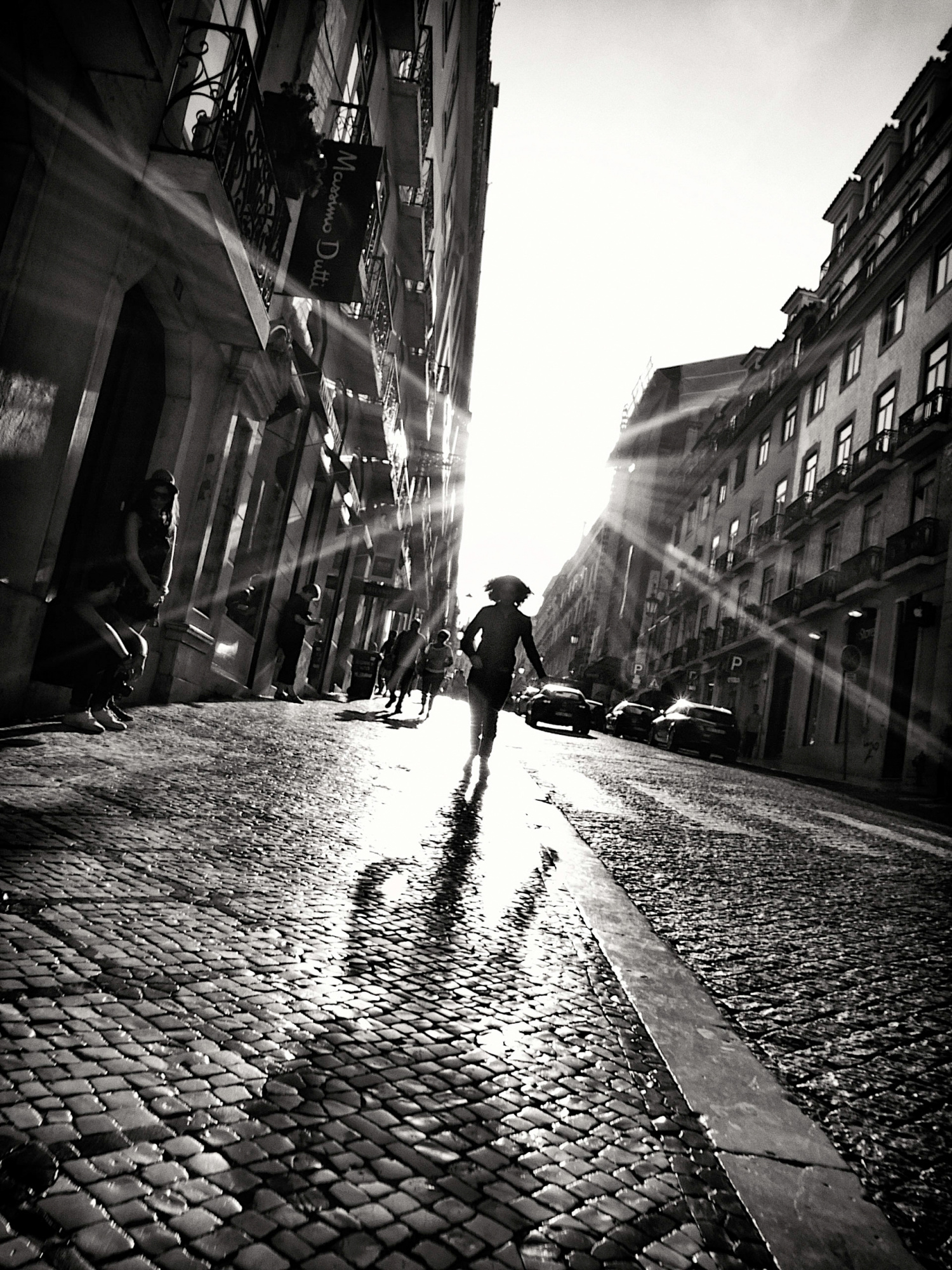
“Rush,” Lisbon (PT) by Fernando Coelho
This photo was taken by instinct.
The sun is in my eyes while I go up to Rua Garrett. A girl ran down the street towards me.
In a split second, I broke not only the horizon straight rule but also the rule to keep the sun behind you and shoot at eye level (rules that I will come back to later).
I squatted to make her and her shadow more prominent in the frame.
I compensated the exposure by -1 EV to control the highlights while shooting against the sun.
Highlights under control, a small aperture, and you add a cool starburst effect to your story.
Finally, I tilted the camera. I got the border of the sidewalk as a stronger leading line, and the composition’s dynamic was turned up.
You get my point when you look at a (post-processed) leveled version below.
Get Down; Climb Up (or Shoot at the Eye Level)
Photos taken at your eye level replicate what we see all the time. We are wired to process and categorize familiar viewpoints quickly. A stand-up eye-level photo often doesn’t challenge the viewer’s perspective.
The previous photo was taken from a low point of view (POV).
Shooting from a higher vantage point also provides unique perspectives.
In the following photograph taken inside the Museum of Contemporary Art in Lisbon, I used a high POV.
The scene becomes flattened and exquisite.
Only with such a perspective could I get all the subjects (including the oddly giant table) as actors in the narrative.
What is down under?
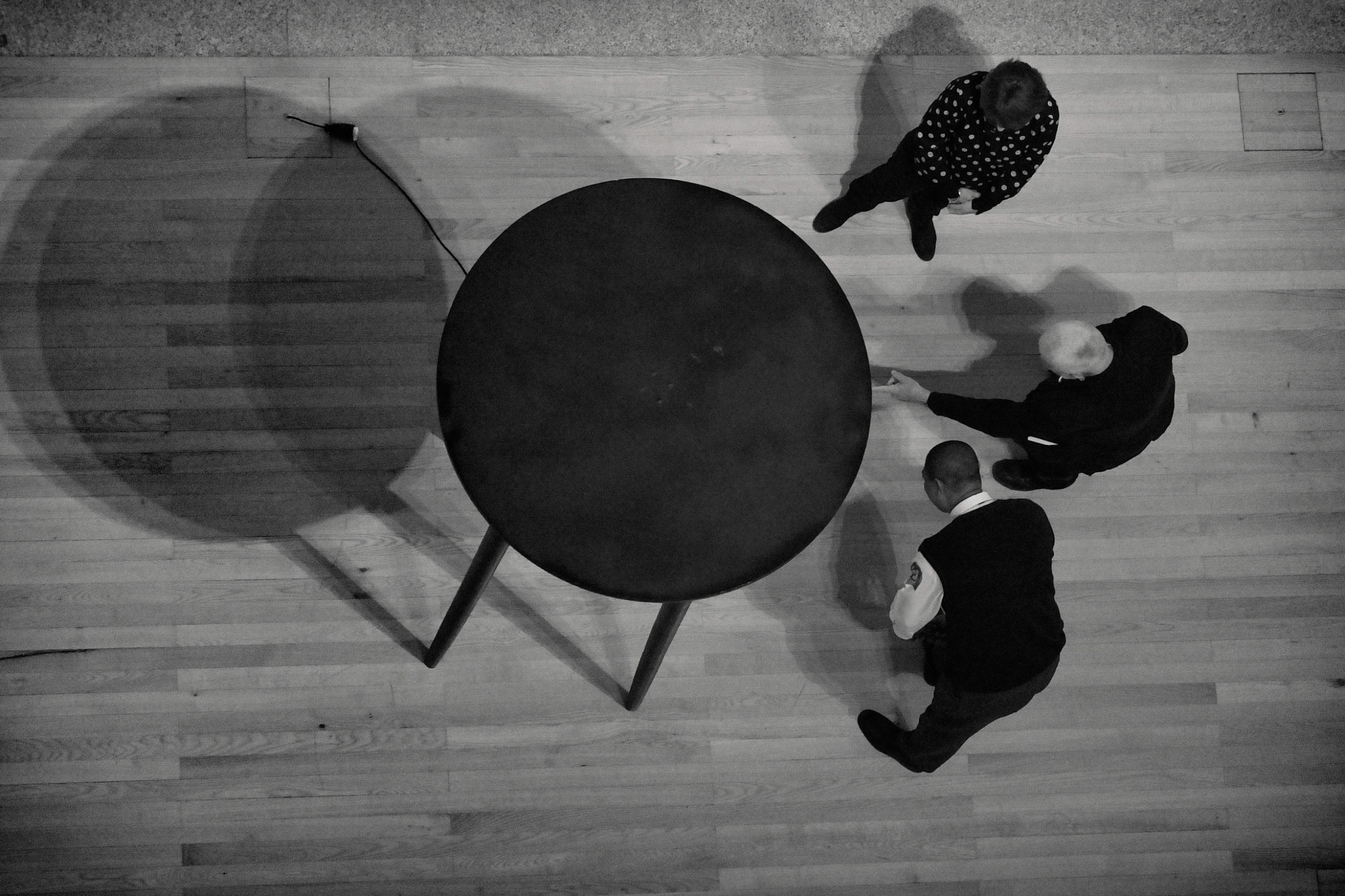
“Look,” Lisbon (PT) by Fernando Coelho
Break the Rule of Thirds (or Follow the Rule of Thirds)
The rule of thirds states that the key elements of your photo should be arranged in thirds — dividing the scene into thirds both horizontally and vertically.
The point of the rule of thirds is eventually to add more interest to the scene. Placing your subject or focal point in the center makes the image look dead, without movement or vibrancy. It leaves the viewer with nothing to do but look straight ahead at your shot, so they quickly get bored and move on.
But what about placing the subject off-center and far from those “thirds”?
Carefully composing your images to be off balance on purpose can make a composition more dynamic and edgy.
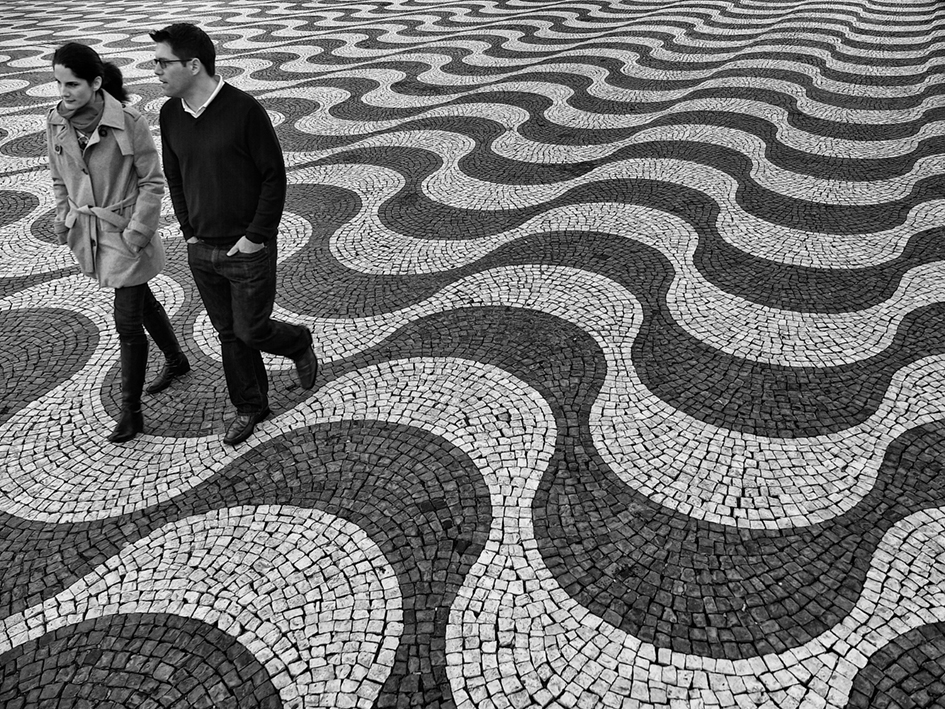
Lisbon (PT) by Fernando Coelho
You can go a step further and even make the frame interact with your subjects within the frame. In the photograph below, the man seems pressed by the boundaries I defined and about to be swallowed by the waves on the sidewalk — big fun.
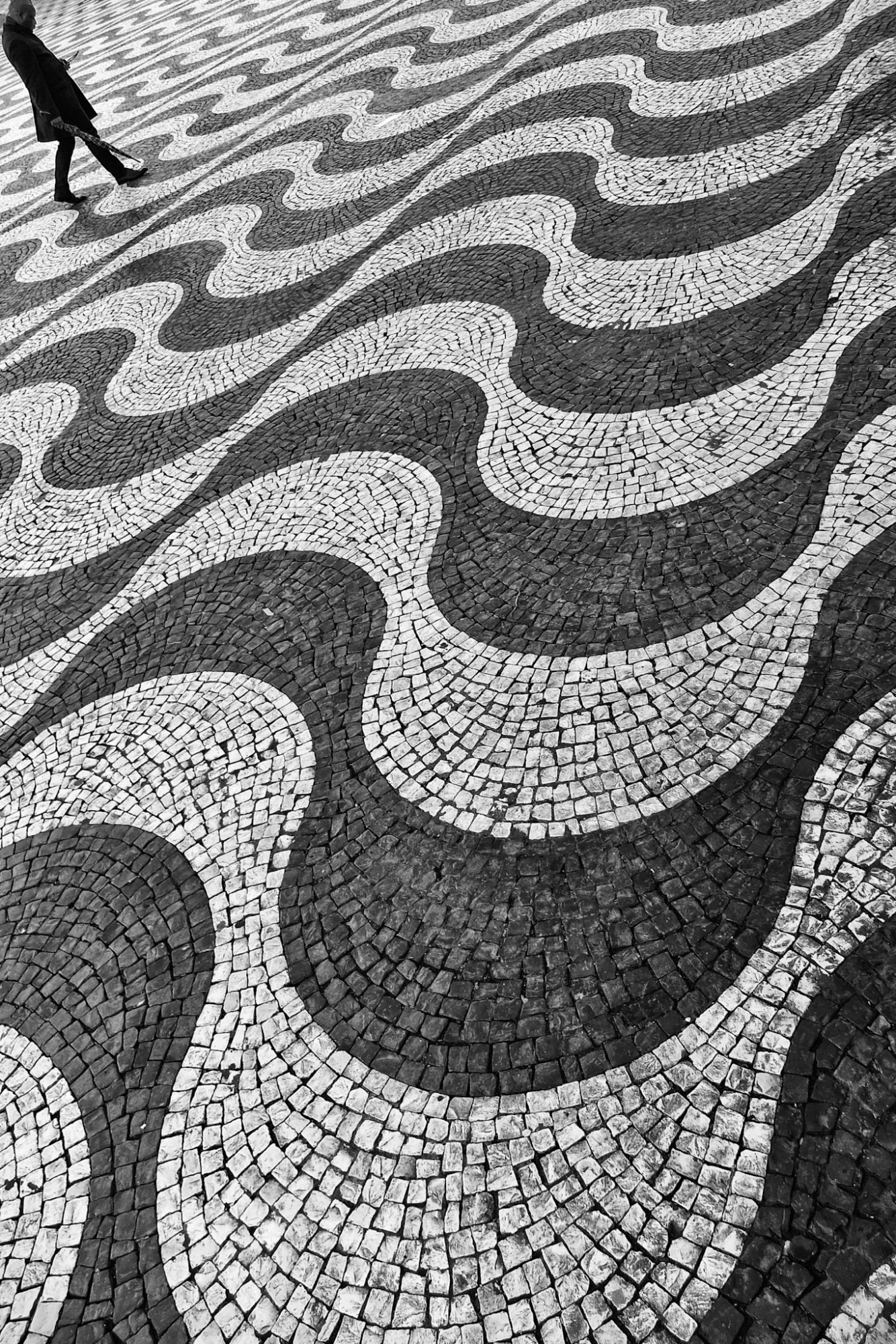
“Compressed,” Lisbon (PT) by Fernando Coelho
Take a step back (or Get Closer)
By getting close, you fill the frame with your subjects. Eventually, proximity allows you to capture facial expressions, gestures, and other details that can reveal a story.
However, this rule depends on whether your photo is all about your focal point. Sometimes, you need to step back to include context; sometimes, you must step back enough to give your viewer a sense of scale. In these cases, the context provided by the subject’s surroundings is just as important as the subject itself and must be included.
The photo below, taken in Glasgow, illustrates my point.
The difference is between an unremarkable photo of a lady walking down the street if I get too close and a feminine version of Gulliver about to lift a tinny Lilliputian…
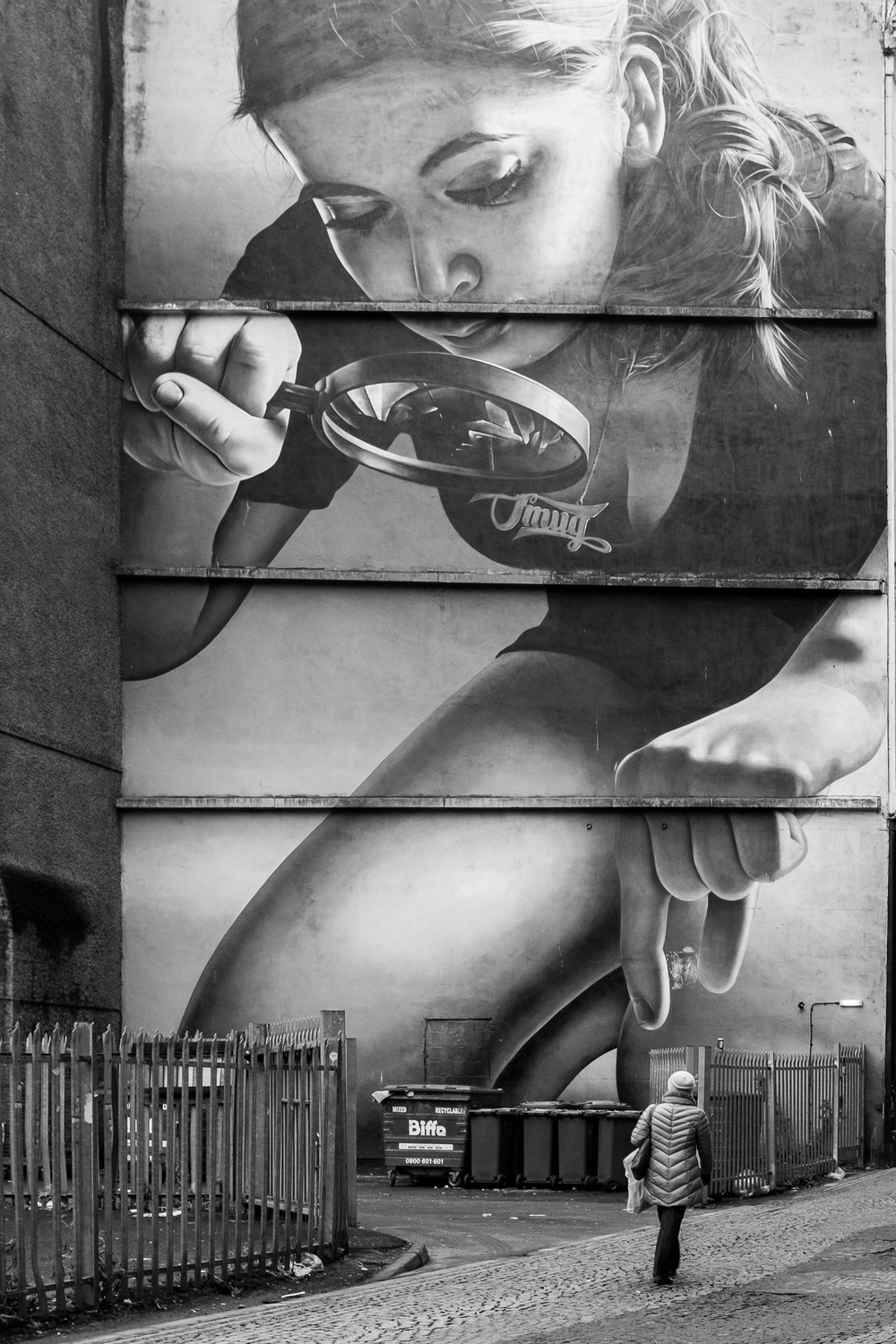
“Lilliputian,” Glasgow (UK) — by Fernando Coelho
Don’t be afraid to experiment, tilt your horizons, and challenge perspectives.
The streets are your canvas and the rulebook?
It would be best if you read it, but it is yours to rewrite.
 | Write |
 | Yaping Zhang PRO 非常感谢您的精彩独特配置以及精湛文章! |
 | Jorge Ribeiro Lume PRO Thank you! |
 | Francisco Villalpando PRO Thank you very much for your excellent article, very inspiring! |
 | Gian Corrado DONATI PRO Great and interesting article ! Thank you so much !!! |
 | Alberto de la Cruz PRO Excellent article; in street photography it is a truly original way of working. |
 | Stephan Rückert PRO Your contribution is very insightful and inspiring. I am eager to see what follows. Thank you very much, Fernando! |
 | Bole Kuljic PRO Great short lesson about breaking the rules. Thank you very much! |
 | MingLun Tsai PRO
Thank you for sharing such an excellent article on the concept of street photography! |
 | Eiji Yamamoto PRO Dear Fernando, thank you so much for your wonderful article! Very helpful and inspiring! Dear Yvette, thank you so much as always! |
 | Elizabeth Allen CREW A superb, inspiring article, and I look forward to the rest of the series. Many thanks, Fernando, and thanks as always to Yvette. |
 | katsumikuresato PRO This is a splendid article. What I aspire to achieve was right here in this piece. |
 | Colin Dixon CREW Great article !!!! |